
The global agricultural sector is in a fertilizer crisis. For decades, the intensive use of chemical fertilizers has been the engine of productivity. This “green revolution” has come at a high price: soil degradation, declining fertility, and environmental pollution.
The current energy and shipping constraints caused by instability in the middle east, further exacerbates the situation. Not only is the supply of chemical fertilizers limited, it just isn’t sufficient to meet the demand. In India alone, the fertilizer import bill reached $12 billion in 2020−21 is projected to reach $20 billion by 20301. The message is clear: the current model is unsustainable.
The solution lies in a adopting a circular economy powered by Liquid Fermented Organic Manure (LFOM). Utilisation of LFOM results in healthy soil, healthy plants, nutritious food and healthy communities. An proven, easy-to-use, sustainable circular economy enabler.
LFOM: Solves the Fertilizer Crises
LFOM is a bacterial rich liquid produced as an output of anaerobic digestion (biogas plants) of organic waste such as food waste. Unlike traditional solid manure, LFOM is rich in beneficial microorganisms and enzymes. This allows plant to easily absorb nutrients and in a way feed the plants, just as gut bacterial are essential for human and animal nutrition.
Better Yields, Lower Costs
LFOM isn’t just a “green” alternative; it is an essential input required to offer compelling ROI for farmers and stakeholders:
- Accelerated Growth: Trials show that LFOM can enhance plant growth by 20% to 25%.2
- Soil Rejuvenation: While chemical fertilizers can sterilize soil over time, LFOM-treated soil has shown a 60% increase in organic matter, compared to a mere 3% increase with chemical fertilizers.3
- Dramatic Cost Savings: Shifting to natural and fermented inputs can reduce dependency on expensive chemicals by 15% to 40%. In specific field studies, the input cost for rice dropped from ₹5,961 to just ₹846 per acre4.
Basic Tests
Some basic tests that we carried out to check the effectiveness of LFOM.
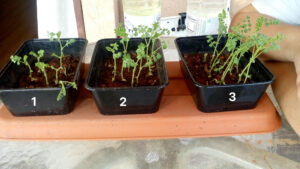
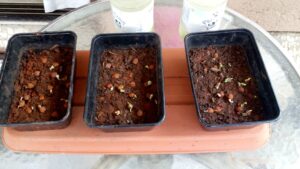
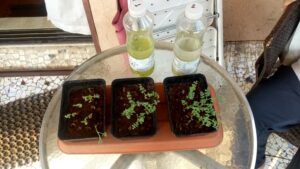
We used three containers with identical conditions – soil, number of Dhania seeds and stored them in the same location. In addition, an identical measured quantity of water daily was added to the containers, with a tweak:
- No LFOM added
- Water : LFOM ratio 200:1 by volume
- Water : LFOM ratio 100:1 by volume
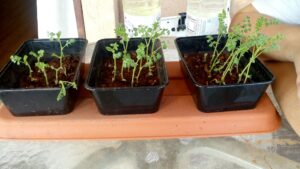
The results show a clear impact in germination and growth! LFOM works! It is time to put it to good use. In fact there is a traditional method that uses the same basic principle – panchgavya. By using biogas plants we generate LFOM in a controlled scientific manner, with each batch monitored and measured for consistency.
No guess work and consistent results backed by over ten years of research and field experience.
A Market Backed by Policy and Infrastructure
Recognition for LFOM is rapidly maturing, supported by robust government policy India:
- Standardization: LFOM is now officially recognized under the Fertilizer Control Order (FCO), 1985, ensuring standardized quality along with safe and effective usage.
- Scaling Infrastructure: Flycatcher Technologies has over 97 functional biogas plants, with more in the pipeline, creating a supply base for LFOM as a high-value input for agriculture.
Conclusion


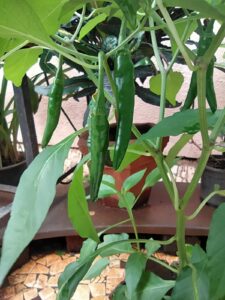
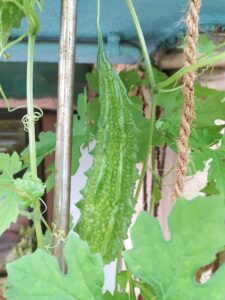
All the vegetables shown above have been grown with LFOM. They taste amazing.
Global events, policy and our experiences have proven that change is needed to protect our soils, farmers and our own nutrition and health. LFOM is one proven and recognized source of soil health, well being for the community and the planet. Give it a try and spread the word!
- Mintallah Mousa A Allouzi, et.al, 2022. Liquid biofertilizers as a sustainable solution for agriculture, Heliyon | 8(12):e12609 [ ➚ ] ↩︎
- Mohita Tewari, 2024. NBRI biofert cutting expense, boosting plant growth, Times of India [ ➚ ] ↩︎
- Manasha M, 2024. Fermenting Liquid Bio-Fertilizer Traditionally and Comparison of Soil Characteristics and Growth of Plants by Bio-fertilizer and Chemical Fertilizer, IJIRT | Volume 11 Issue 3 [ ➚ ] ↩︎
- Gupta, Niti, et.al, 2020. Can Zero Budget Natural Farming Save Input Costs and Fertiliser Subsidies? Evidence from Andhra Pradesh. New Delhi: Council on Energy, Environment and Water.[ ➚ ] ↩︎

